
They tried to warn me about Sion James.
“You have this conversation with so many people, and they all say the same stuff,” said Dave Bradley, who worked with James as part of Duke’s marketing team. It’s true. I interviewed several people for this story, and everyone around James used identical, glowing descriptors.
“Humble.” “Winning player.” “Leader.” “Terrible trash-talker.” (We’ll get to that, I promise.)
It doesn’t take long before you’re side-eyeing the Kool-Aid. “People should watch out for him becoming President of the United States one day. He’s a thorough human being,” says Sandy Ryan, friend and former Tulane teammate.
The evidence is overwhelming. Everyone lights up like a Fourth of July sky when discussing James, overjoyed to share anecdotes about James waking before the sun to organize a fundraiser or showing up to a former coach’s kid’s birthday party:
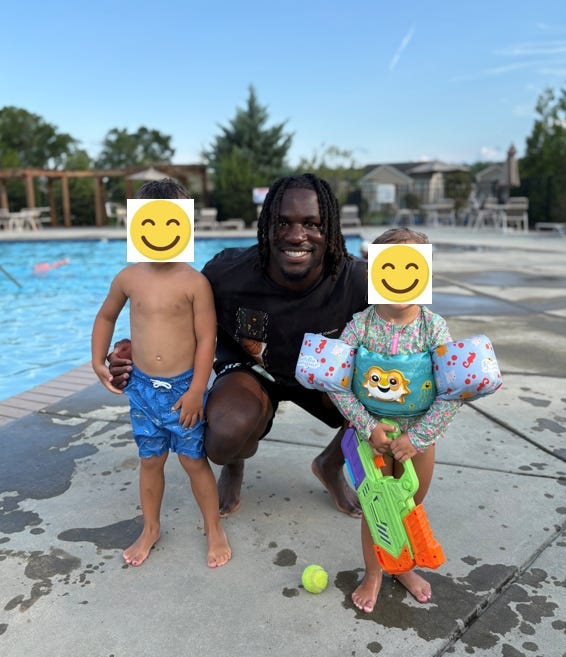
Basketball people love talking about intangibles, qualities they can't quite measure but swear are important. With James, intangibles have a funny way of becoming tangible. Everywhere he goes, he leaves winning in his wake. The Charlotte Hornets are the latest team hoping to harness his magic.
Like so many others, James’ legend starts with some breakfast sandwiches.
One Saturday morning early in his Tulane tenure, James and Ryan pooled what little spending money they had — this was before NIL, mind you — and bought a dozen McMuffins for New Orleans’ unhoused population.
“It felt like I had just signed away my entire bank account,” said Ryan. “We ended up having a conversation with a homeless fella. His name was Harry, and we sat there for about an hour talking to Harry. And we left both so touched by his story and moved by the circumstances he was facing. How do we show up for someone like that?”
“Living on the streets is very isolating and lonely, and that lack of human connection starts wearing on people’s resolve to be able to do the right thing. That opens up the world of addiction and all other sorts of things, and we’re like, what if we could just give Harry something to look forward to every week? So, in that moment, we committed to, we’re going to show every week for Harry.”
And show they did, again and again. Soon, Ryan and James founded Ryan’s Giving Tree, a 501(c)(3) nonprofit, which led to recruiting volunteers from the Tulane student body and even basketball coaching staff while soliciting donations from corporations like Wal-Mart.
“Sion handled the daily operations, making sure volunteers were set up, setting plans to serve multiple sites at a time. He had that all laid out in Excel, spreadsheets, forecasts, he was all in on it. It was very easy to recruit other people, because if the starting point guard is showing up Saturday mornings, what’s your reason for not showing up?” explained Ryan.
Eventually, they scaled to hundreds of food items each weekend without sacrificing the human touch that differentiated them from a standard food drive.
That same willingness to show up every day allows James to shine on the basketball court, too. When he wasn’t helping the community, James was honing his on-court skills.
Initially, he was an afterthought on offense. “I came into college not being able to shoot, but I didn’t really know that,” James said on Duke’s The Brotherhood podcast. “In high school, I could do whatever I wanted. I was one of the best players in the county...I’m not really hearing much negative about my game. I get to college and dudes are guarding me at the free-throw line. I said, ‘What the heck are y’all doing back there?’”
James’ road from averaging 5.8 points and shooting 28% from deep as a freshman to notching 14.0 points and 38.1% as a senior was grueling. Claude Pardue, an assistant coach at Tulane and Sion’s personal shooting sensei, developed a plan for him after his freshman year.
“He was great because he believed in the big picture. I basically said, ‘Let’s do 3,000 makes of proper form shooting under the rim. Whenever you get the 3,000, let me know.’ A few days later, he came in and said, ‘Coach, I’m at 3,000, what’s next?’” Pardue said via phone. “I said, ‘Okay, take a step back.’ And his form changed. So I said, ‘Nope, do another 1,000,’ and he had to step back in. He wasn’t very happy with me.”
“We slowly built it up to the point where we’re shooting free throws, and we’re adding legs to it… it was ugly for a long time. And he just slowly developed. The discipline that it took, it’s very much a growth mindset vs. a fixed mindset. He believes in it for the long run. He made 75,000 makes over a six-month period. Then he did it again the next summer. Just did it by sheer repetition and being bored.”
“That’s exactly what it was,” James told me at Las Vegas Summer League in July, half-grimacing. “But man, I got so much better doing that.”
After a storied Tulane run that included leading the Green Wave to their highest winning percentage since 1999-2000 and two AAC Sportsmanship Awards, James graduated with hopes of entering the draft. Instead, reality called — or rather, it didn’t, as James was not selected to go to the NBA Draft Combine. Still, it was only a temporary setback.
“He’s wanted to be a pro forever,” said Pardue. “When he didn’t get invited to the Combine, he called me and was heartbroken. But he was immediately like, ‘Okay, what’s the plan? Let’s go attack it.’ At Tulane, we were like, ‘It’s time. You should go to Duke, you should go play with Cooper Flagg. It’s time.’”
James transferred to Duke University to prove he could compete at the highest levels of college basketball. It didn’t take long for James to earn a starting spot at the country’s most hallowed program, knocking down spot-up threes and taking (and breaking) the toughest defensive assignments:
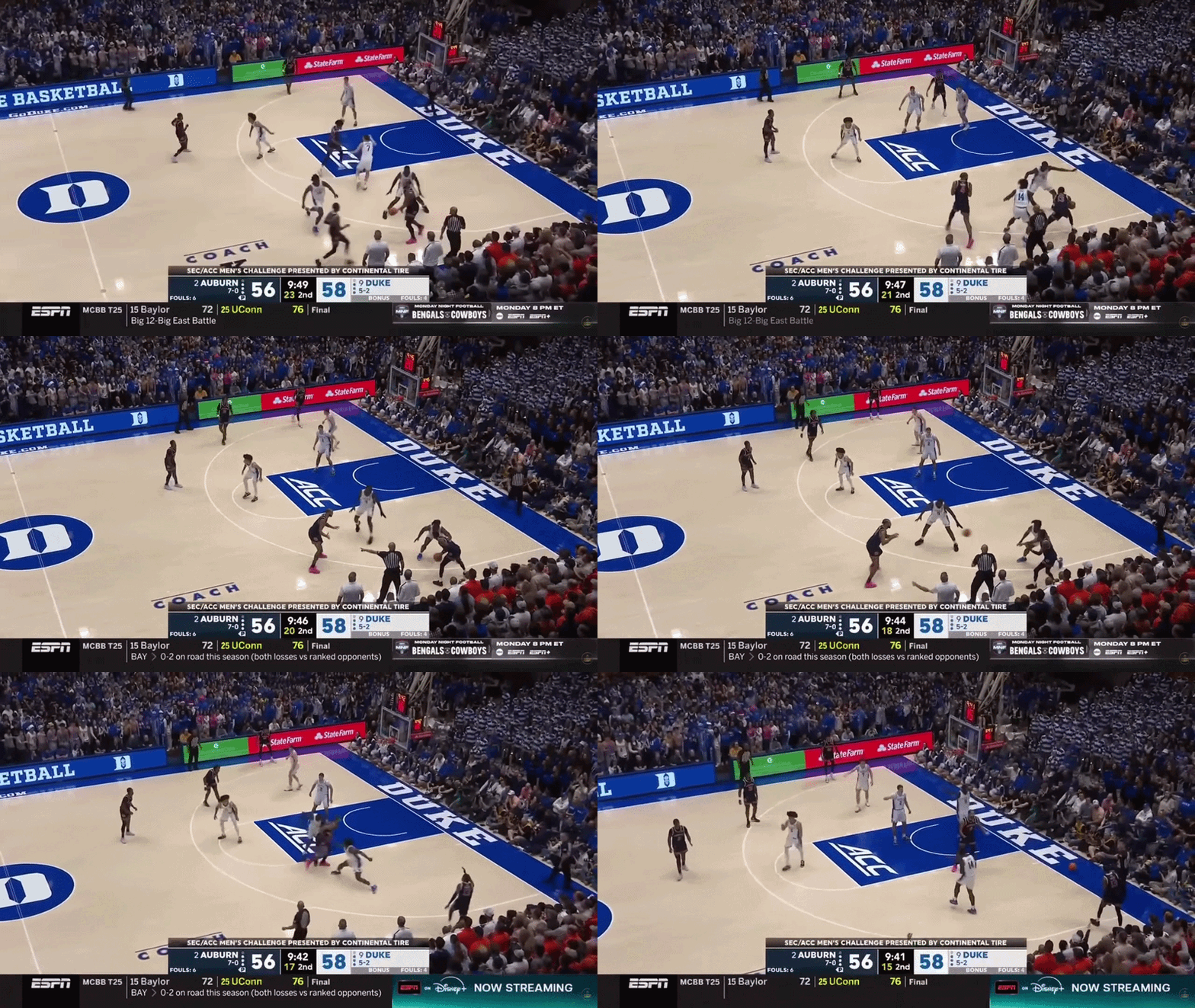
James posted a 50/40/80 shooting split at Duke and was a critical part of the Blue Devils’ run to the Final Four.
“I think it’s just his professionalism, his feel for the game, his competitiveness that set him apart. What I loved most about Sion, though, is he never fought coaching one time,” Duke coach Jon Scheyer said. “He was always hungry to learn more, always felt like he could do better and was just like Kon [Knueppel]. He was hard on himself, always took responsibility.”
Naturally, James took responsibility off the court, as well.
He worked with Duke’s support staff to ramp up another nonprofit, the Sion James Foundation. This wasn’t a no-show fluff project. “This dude was on the ground doing all the legwork,” said Bradley. James did everything from designing logos to managing donation deliveries with his trademark hyper-organized, color-coded spreadsheets.
At Summer League, James confirmed that the foundation had three major upcoming projects: an August basketball camp in the hometown of a college teammate who passed away; the third annual toy drive for a Charlotte children’s hospital; and the formation of a grant program to help fund high school students starting high-leverage social impact programs. All this in addition to the tens of thousands of dollars the SJF had already raised for community-oriented organizations.
Impressive stuff for a 23-year-old, and it caught the eye of a certain NBA franchise located just two hours from Duke.